
Family History
From Melsungen around 1395 to the 21st century
Origins – from Melsungen to Pomerania
The family’s trail begins not in the nobility but on the land – and it begins with a first name: a “Gerlacus apud forum” is recorded in Melsungen (northern Hesse) in 1318, and a juror “Gerlach an deme markede”, Gerlach at the market, in 1332. In both entries the given name stands first and the place of residence behind it; that is not yet a surname. Gerlach zu Obermelsungen (c. 1395 – c. 1469/70), a farmer, is regarded as the first reliably documented member of the line. The family remained in Melsungen for several generations.
Martin Gerlach II (c. 1560–1638) married at Nienburg on the Saale on 9 September 1588 and became mayor and judge there in the service of the princes of Anhalt. How he connects with Melsungen is the hardest point in the whole line: Armbrust puts a Martynus Gerlach on the Melsungen community committee in 1608, and a man who marries on the Saale in 1588 is not the same man. What the Hessian archives yield on this, and what they do not, is set out in detail on the page about the armorial letter of 1433.
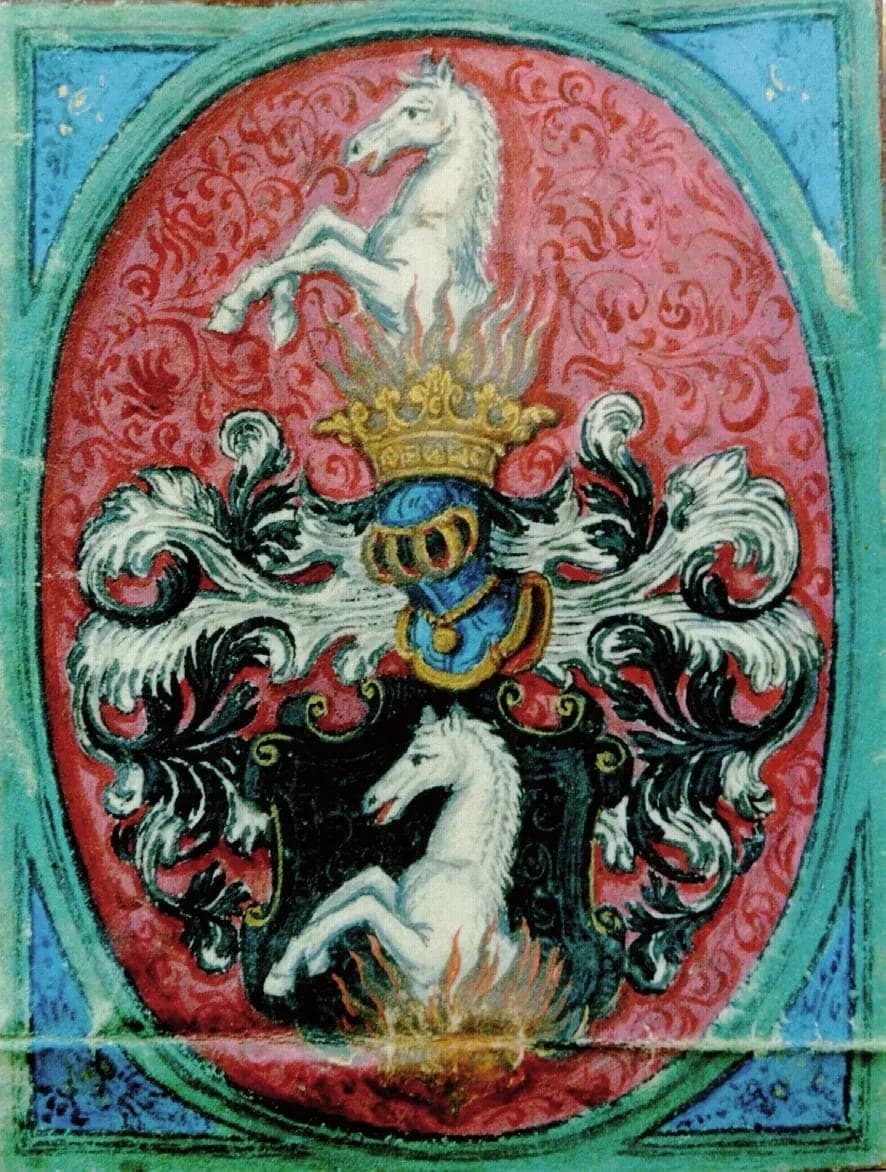
According to family tradition, the family had already received an armorial letter from Emperor Sigismund in Rome on 10 August 1433 – though this link to the Melsungen line cannot be documented: the register of Jürgen von Gerlach’s family history lists the supposed recipient, “Jakob”, with the note “allegedly 1433”.
The family history of 1903 derives the name itself from Saint Gerlach, a knight of twelfth-century Belgium who after his conversion herded swine for the Knights of St John in Jerusalem. The legend was unknown in the family until Ludwig von Gerlach learned it in 1856 in the Prussian House of Representatives from the deputy August Reichensperger; the source calls a connection unproven but not impossible.
The charters themselves are in print: Georg Kupke, state archivist at Stettin, published “Familiengeschichte derer von Gerlach. Band I: Urkunden 1347–1687” with Herrcke & Lebeling in 1929, forty-eight pages with nine plates, as the first volume of the series “Beiträge zur Geschichte der Familie v. Gerlach”.
Ludwig Armbrust’s history of the town of Melsungen, 1905, prints the roll of aldermen for 1318, where “Gerlacus apud Forum” stands first, and that of 1332 with “Gerlach an deme Markede”; a study in the Archiv für Sippenforschung takes both for the same man.
The Genealogical Handbook of the Nobility puts the family’s first documentary appearance in 1447 with a Gerlach of Obermelsungen and in 1448 with Contze Gerlach at Melsungen, after the accounts of the rent-master and bailiff of Melsungen in the Marburg state archive; it lets the secure pedigree begin with Martin Gerlach, mayor and judge at Nienburg.
Contze Gerlach can be traced from 1448 to 1469, at Melsungen and on the farm of Schwerzelfurt: the charter granting the farm in tenant tenure to him, his wife Emmele and their heirs survives at Marburg. Where the farm lay Armbrust states precisely: “On the north-western slope of the Wildesberg, about midway between Adelshausen and Malsfeld, lay Schwerzelfurt, at first a village, later shrunk to a single farm.” His chapter is headed “Schwerzelfurt (Fahre)” – Fahre is the second name of the same place, after the ford that crossed the Fulda here and over which a bridge was built in 1448. In the end the place fell deserted. In 1288 it had belonged to the Westphalian abbey of Hardehausen, which sold it a few years later to the nuns of Heida near Morschen.
How a well-informed outsider summed the family up in 1867 can be read in Heinrich Berghaus’s Landbuch of the Duchy of Pomerania, in the article on Parsow. Four sentences, and only the first holds entirely: “The Gerlach family does not belong to the native houses of the Pomor land, but settled there only after the middle of the eighteenth century, at Gantzkow in the year 1755. It comes from the Lower Rhine, from the lands of Cleves (?). The family preserves a diploma of 10 August 1433 by which Jakob G. was raised by Emperor Sigismund into the imperial knighthood. One of his descendants, Leberecht v. G., who died as a judge of the court at Köslin in 1742, received recognition of his noble status, for the Kingdom of Prussia as well, in the year 1735 from King Frederick William I.” Ganzkow in 1755 agrees with everything else the family has handed down. The Lower Rhine origin Berghaus marked with a question mark himself. That the letter of 1433 raised anyone into the imperial knighthood its wording does not say – it makes a fellow of arms and grants the standing of knighthood, which is another thing. And that Lebrecht was a descendant of Jakob is the connection asserted since 1878 and never yet proved. The pedigree, as scholarship has traced it since 1930, points instead to Melsungen on the Fulda; what that route hangs on stands on the page about the armorial letter. It can be said who first wrote the Melsungen line down: no nineteenth-century genealogist and no book of nobility. The Handbuch des Preußischen Adels of 1893, for which the families supplied their own data, goes straight from 1433 to “Leberecht Gerlach, Hofgerichtsrath zu Köslin” (court councillor at Köslin); Melsungen does not appear in it. The line is first found in a typescript that Joachim von Gerlach and Reinold von Thadden-Trieglaff compiled between 1930 and 1960 under the title “Die Melsunger Gerlach” (the Melsungen Gerlachs), and it entered printed scholarship through an essay by Percy Ernst Schramm of 1963. The parish registers cannot measure it: those of Melsungen begin in 1619, those of Obermelsungen in 1641, and for the village of Obermelsungen no municipal records survive at all. (Handbuch des Preußischen Adels, vol. 2, Berlin 1893, p. 254; Staats- und Universitätsbibliothek Göttingen, Cod. Ms. Fam.-Arch. v. Thadden I : K 15 : 13.)
Köslin, Berlin, Pomerania – the path to nobility
From the Nienburg line came Lebrecht Gerlach (1669–1742), a councillor at the Court of Justice (Hofgericht) in Köslin, Farther Pomerania (Hinterpommern). The family’s Prussian line goes back to him. On 2 September 1735 Frederick William I recognised and renewed its noble status for Prussia. The date does not come from the family but from the files: in print it stands first in 1874, with Maximilian Gritzner, who drew on notes from the Secret State Archives and the College of Heralds. The papers of the transaction are catalogued there. What can be tested against it is set out on the page about the arms. His son Friedrich Wilhelm von Gerlach (1711–1780) served as Privy Councillor of Finance in the General Directory in Berlin, at the court of Frederick the Great, and laid the foundation for the family’s later Pomeranian estates with the acquisition of Schwemmin (1765) and Parsow (1779). In 1773 the Warthebruch colony of Gerlachsthal (today Gostkowice), named after him, was founded.

Two Branches – Parsow and Rohrbeck
After Friedrich Wilhelm’s death, his sons divided the inheritance in 1780: Ludwig Wilhelm August von Gerlach (1751–1809) received Parsow and Schwemmin, founding the Parsow branch; his younger brother Carl Friedrich Leopold von Gerlach (1757–1813) received the remaining Pomeranian estates and, in 1805, also acquired the Rohrbeck estate in the Neumark – the later seat of the famous “Gerlach brothers” and the starting point of the Rohrbeck branch. The Schötzow estate, acquired jointly in 1781, remained in the brothers’ shared ownership until its sale in 1796.

1806–1815 – The Lord Mayor and the Four Brothers in the Field
Carl Friedrich Leopold von Gerlach, president of the War and Domains Chamber of the Electoral Mark and Privy Councillor of Finance, became in 1809 – during the French occupation – the first Lord Mayor of Berlin elected under the Stein municipal reform, and remained in office until 1813; the city of Berlin later honoured him with a grave of honour at the Domfriedhof II cemetery. Three of his four sons from his marriage to Agnes von Raumer – Wilhelm, Leopold and Ernst Ludwig – went out in 1813 to the Wars of Liberation against Napoleon; the youngest, Otto, was twelve. The family’s death notice distinguishes them precisely: Wilhelm joined as a volunteer rifleman with the Neumark dragoon regiment, Ludwig as a volunteer rifleman with the Foot Guards – Leopold was already in the army and went as a lieutenant and adjutant. The brothers fought in Silesia and at Leipzig, crossed the Rhine at Kaub in 1814, took part in the campaign in France and stood at Ligny and Wavre in 1815.

Law and Reaction – the Gerlach Brothers
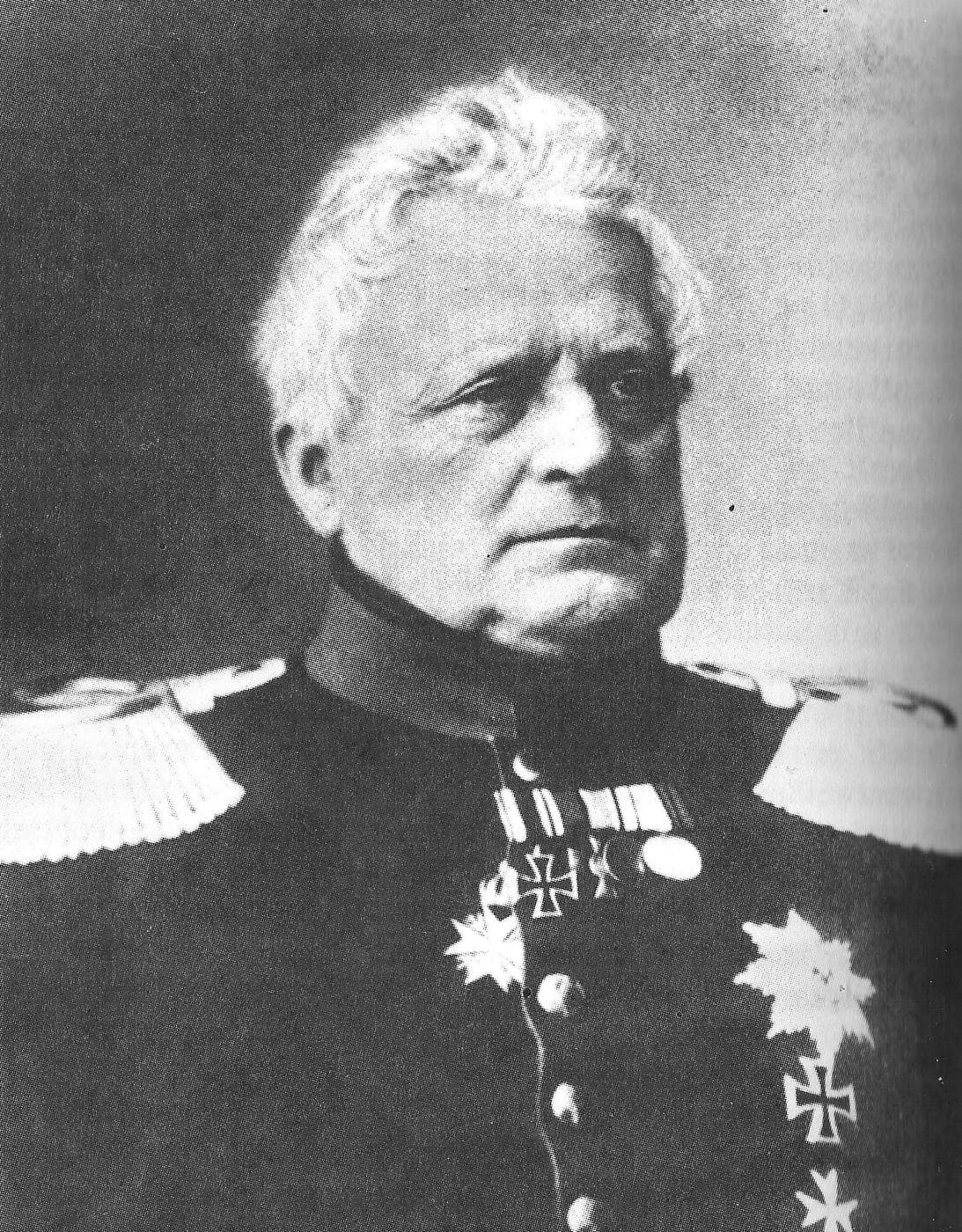
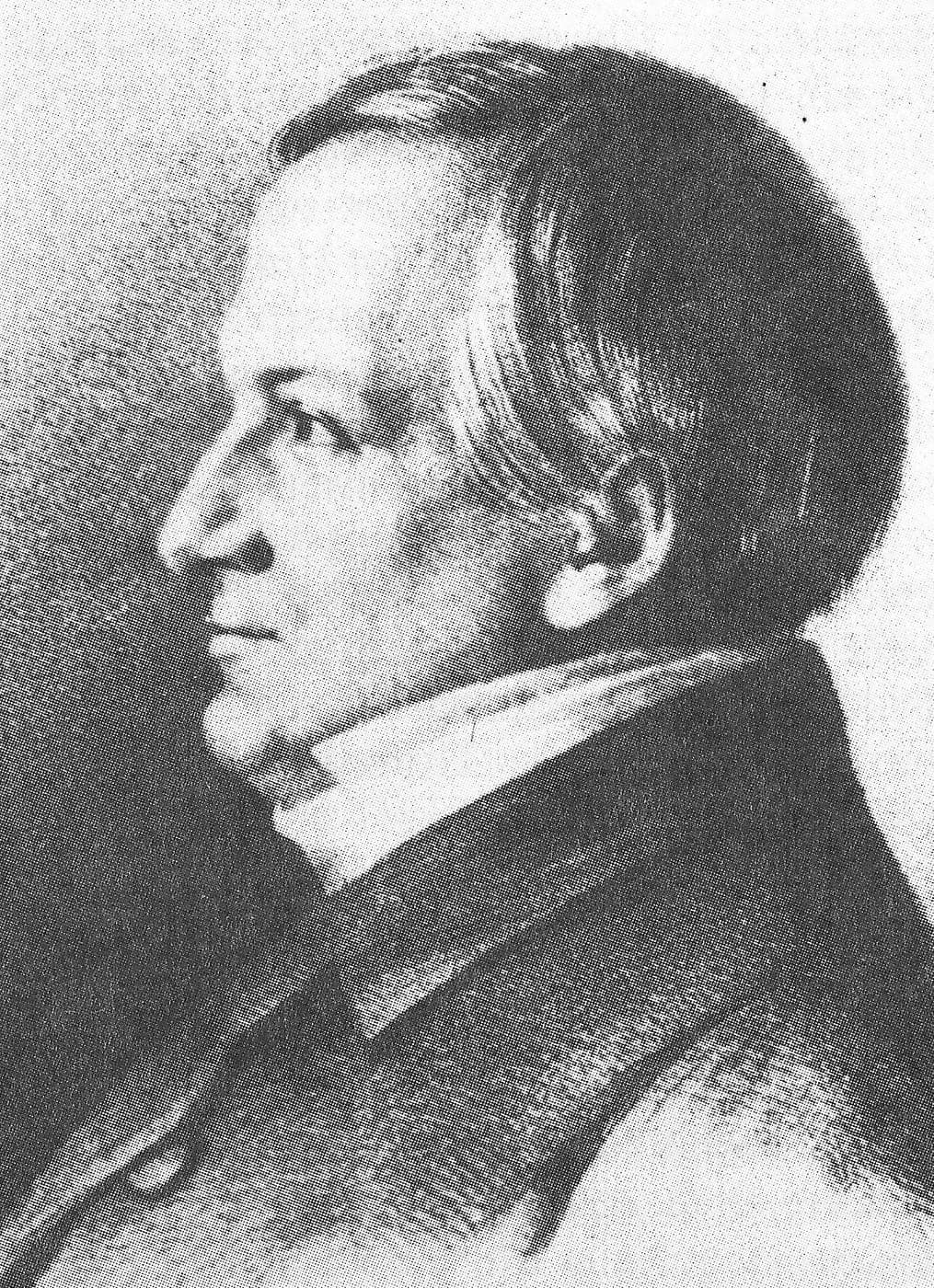
From Carl Friedrich Leopold’s marriage to Agnes von Raumer came the four brothers who helped shape the political and intellectual life of 19th-century Prussia. The eldest, Wilhelm von Gerlach (1789–1834), became vice-president of the Higher Regional Court at Frankfurt (Oder); during the persecution of the “demagogues” in 1819–1822 he refused, as a judge of the Berlin Kammergericht, to open proceedings against the publisher Georg Reimer, the gymnastics pioneer Jahn and E. T. A. Hoffmann. Ludwig Friedrich Leopold von Gerlach (1790–1861) became General of the Infantry and Adjutant-General to Frederick William IV – one of the king’s most influential advisers during the reactionary period after 1848. Ernst Ludwig von Gerlach (1795–1877), jurist and publicist, co-founded the Conservative Party and the “Neue Preußische (Kreuz-)Zeitung” (1848); together with Leopold he shaped the conservative “Kamarilla” around the king. Ernst Ludwig broke with Bismarck twice: in 1866 over his rejection of the war against Austria and the subsequent annexations, and again in 1873/74, when the Kulturkampf brought a prosecution over his pamphlet “Die Civilehe und der Reichskanzler” (Civil Marriage and the Chancellor) and his resignation as presiding judge. Historian Hans-Joachim Schoeps called him “the only systematic theocrat in modern history”. The youngest brother, Otto von Gerlach (1801–1849), was a theologian, pastor of St Elisabeth’s in Berlin and finally court and cathedral preacher.
The Houses of Rohrbeck and Nordhausen, the “Ottonians”
Three houses descended from the four brothers. Wilhelm’s descendants formed the House of Rohrbeck: Dr Friedrich von Gerlach (1828–1891), Landrat and senior provincial councillor, Jakob von Gerlach (1830–1908), Landrat and president of the Berlin Missionary Society, as well as Martin von Gerlach (1860–1929), a pastor, and Servatius von Gerlach (1868–1950), a major. Leopold’s descendants formed the House of Nordhausen, with Berndt von Gerlach (1828–1889), a Landrat and member of the Prussian House of Representatives, and his son Berndt-Leopold von Gerlach (1879–1948), a cavalry captain. Otto’s descendants were known within the family as the “Ottonians”: Konrad von Gerlach (1836–1875), a divisional chaplain, his brother Leopold Friedrich von Gerlach (1839–1874), a captain, and the latter’s nephew Otto von Gerlach (1869–1924), a lieutenant colonel.
Where the family lived in Berlin
Sixty-six annual volumes of Berlin directories, from 1820 to 1902, can now be searched in full text. What emerges is a chain of dwellings – and at the end a finding that says as much as the addresses themselves. In 1823 three von Gerlachs appear under the same heading, “behind the Catholic church”, that is behind St Hedwig’s: the widowed President’s wife Agnes née von Raumer and her sons, the Kammergericht judge Gustav Wilhelm and Major Leopold. That the family had been there for some time is shown by a wholly different source. The biography of Oberpräsident von Kleist-Retzow remarks in passing of his friend Hermann Schede, born in Berlin in 1812, that his parents’ house stood “next to that of the Gerlachs by the Catholic church”. The directory of 1823 therefore records no move but a state of affairs at least eleven years older – and, incidentally, how a friendship began that lasted a lifetime.
In 1837 Leopold, lieutenant colonel on the general staff and adjutant to Prince William, lives at Wilhelmstrasse 79, and from 1844 at number 78 – which was also the command seat of the First Guard Landwehr Brigade that he led. Next door, at 77, stood the Radziwill palace, from 1875 the Reich Chancellery. Otto the preacher moves with his parish through the north of the city: Brunnenstrasse 2 in 1837, Auguststrasse 69 in 1839, Invalidenstrasse 5 in 1847, Louisenstrasse 18 in 1848 – all within the parish of his Elisabeth church. His widow Pauline appears at Schifferstrasse 8 in 1856, at Schellingstrasse 10 from 1861 to 1876 and at Lützowstrasse 82 in 1880. Her son Leopold Friedrich, a captain in the Guard Fusiliers, lives at Chausseestrasse 38a in 1872. Berndt keeps his father’s flat at Wilhelmstrasse 78 after his death. Adelheid, widowed Countess Reichenbach since 1867, is at Bendlerstrasse 8 in 1868 and Hohenzollernstrasse 14 in 1872. And Luise, as matron, runs the Bethanien deaconess house at Mariannenplatz 2 from 1874 until at least 1883.
One year stands out: in 1839 the directory lists a “von Gerlach, Landrat and estate owner” at Steglitz 5 – precisely in the years when the Beyme inheritance had fallen to Charlotte von Gerlach née von Beyme.
The finding that remains for these volumes lies not in the entries but in what is missing: in none of the sixty-six volumes does a von Gerlach carry the “E.” with which the directories mark the owner of a house. Wherever it could be checked, the house belonged to someone else – Schellingstrasse 10 to a professor, Wilhelmstrasse 77 to Prince Radziwill. In Berlin the family rented, or lived in official quarters. Their property lay on the land.
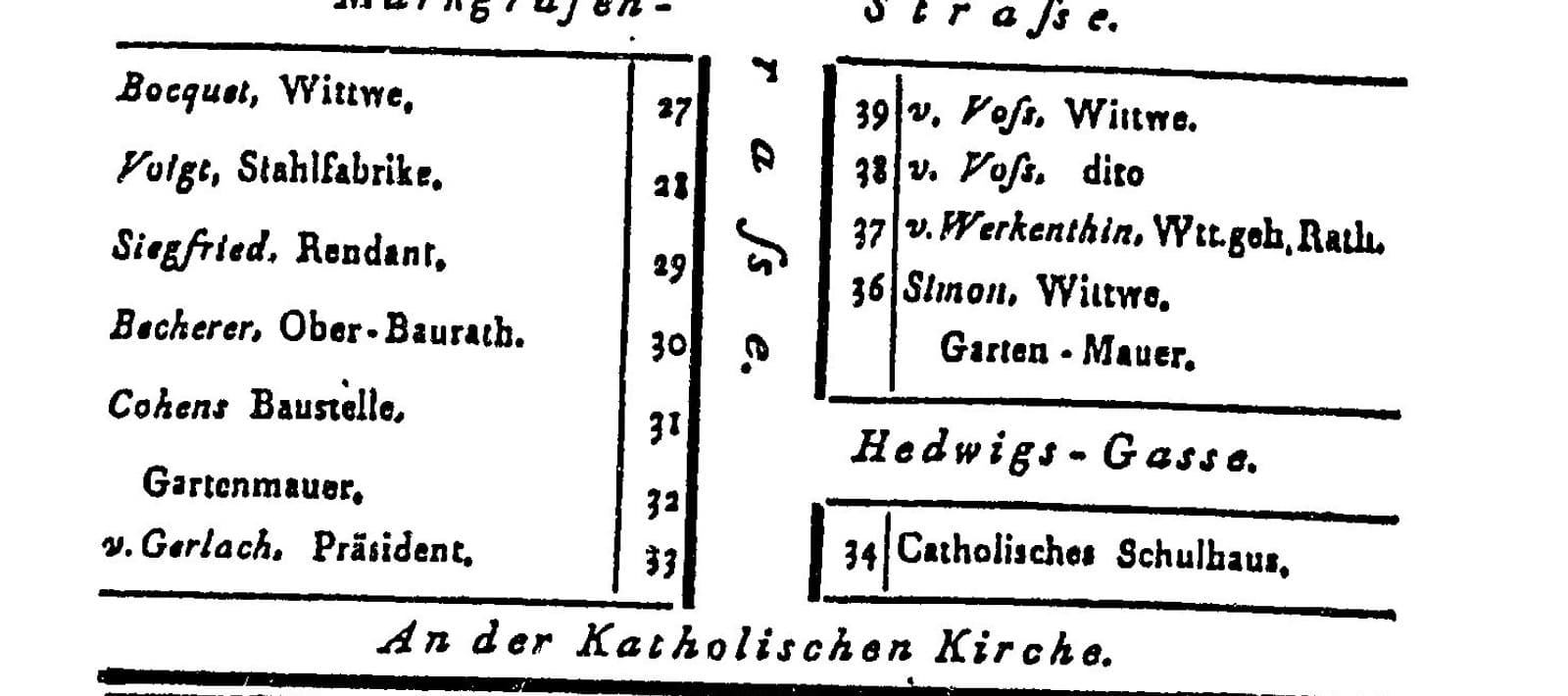
For the time before them this does not hold, and a book twenty years older says so precisely. In 1801 Karl Neander von Petersheiden published “New illustrative tables of the whole residence city of Berlin, or register of all proprietors” – street by street, house by house, with an alphabetical register of all owners at the back. There, under G, the same man appears twice: “v. Gerlach, Präsident”, number 33 on page 33, and below it “– ditto”, number 1 on page 148. The columns are headed “No.” and “Pag.”: house number and page of the street table. Page 33 is the Französische Straße; the numbers run downward there, 31 is “Cohen’s building plot”, 32 a garden wall, and 33 is the last before the rule that closes the table: “An der Katholischen Kirche”. Opposite, under 34, the Catholic schoolhouse.
Page 148 is the street “Hinter dem Opern-Hause”, and its first entry reads “1. Gerlach, Präsident”. It is a corner property with two addresses, at the grandest place in the city: on the Opernplatz, beside St Hedwig’s, facing the Opera and the Royal Library – on the Forum Fridericianum, today’s Bebelplatz. The president is Carl Friedrich Leopold von Gerlach; that it is he is secured by the directory of 1823, which lists his widow at the same spot. The family did own a house in Berlin – only before 1820.
Two questions remain, and the volumes answer them. The lane “Hinter dem Opern-Hause” and the lane “Hinter der katholischen Kirche”, under which the directories list the family, are one and the same: both run from the Französische Straße to the Opernplatz, both have five numbers, and in both the last houses belong to the Catholic church. So the plate higher up on this page shows this very property. And the family stayed there a long time – in 1823 the president’s widow with two sons, in 1835 Major Leopold and his brother Otto, then a private lecturer in theology, in 1836 Leopold alone in a house with ten tenant parties, and in the volume for 1837 no one at all.
20th Century and Present
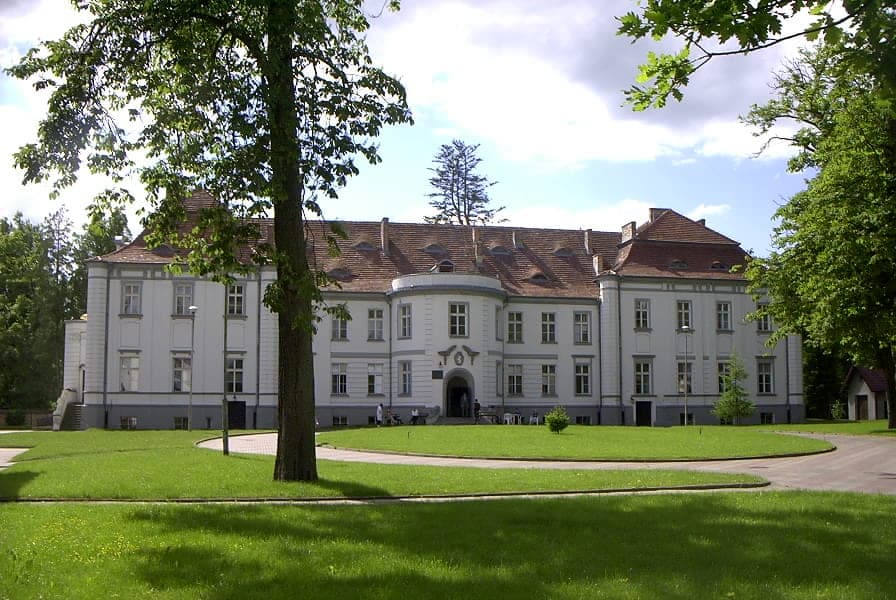
The Pomeranian main line under Landrat August von Gerlach (1830–1906) and his son Karl August von Gerlach-Parsow (1883–1945) finally united the estates of Parsow, Schwemmin, Trienke and Drosedow under one ownership. In 1945 the Red Army shattered this estate definitively; Karl August was abducted and died on 11 October 1945 at Friedenshütte in Upper Silesia. The Parsow fideicommiss library was largely lost, as was much of the fabric of the manors; individual manor houses still stand, among them the one at Parsow. What survived is the family archive, today the Gerlach-Archiv of the University of Erlangen-Nuremberg: some 17,000 documents – roughly 15,000 letters, along with Ernst Ludwig’s diaries (1815–1877) – handed over to the university in 1954; between 2012 and 2015 the holdings were newly catalogued and are now fully indexed in the Kalliope union catalogue. They grew in stages: a partial estate that the archive keeps as its “special archive” was added only later, given by the Tessen von Gerlach-Parsow branch. The widely branched family today nurtures this tradition through a family association with a regular family gathering; in 2015 Jürgen von Gerlach’s family history, “von Gerlach. Lebensbilder einer Familie in sechs Jahrhunderten” (Portraits of a Family across Six Centuries), was published. A second, smaller holding has been at Göttingen since 2017 and 2023: the von Thadden family archive, given to the university library from family possession, contains under the shelfmark K 14 a series of its own, “Family Gerlach (Rohrbeck archive)” – eight folders in one box. In it lie Klaus von Gerlach’s work on the four brothers, three hundred and ninety-three leaves of typescript with handwritten corrections, his study of the Bismarck letters, Joachim von Gerlach’s descendant tables of 1966 and Kupke’s volume of charters. The road there ran through Ehrengard von Gerlach, who married into Trieglaff in 1888.
Other Families named von Gerlach
The shared surname Gerlach often leads to confusion in literature and online with other families of the same name. Best known is the family ennobled in 1840 for the Berlin police president Karl von Gerlach (1792–1863). It comes from the Neumark – its line begins with a director of excise at Landsberg an der Warthe – and only the grandson of the man ennobled sat in Silesia; it includes the publicist and pacifist Hellmut von Gerlach (1866–1935). The surest way to tell the two houses apart is the arms: here the silver horse issuing out of red flames on a black field – there, on silver, a black horse issuing out of blue water. The Brünn yearbook calls them of the same descent without supporting it; no connection has been demonstrated to this day. Also unrelated are the Hessian Freiherren von Gerlach (raised to the baronage in 1838) and several further Gerlach families that Jürgen von Gerlach’s book distinguishes explicitly from this one.
One confusion meets anyone who searches for the name in Greek, Turkish or Bulgarian books: Stephan Gerlach, from 1573 to 1578 chaplain to the imperial embassy at Constantinople and author of a famous diary. He does not belong here, and his own funeral oration, printed at Tübingen in 1614, says why: born on 26 December 1546 at Knittlingen in the district of Maulbronn abbey, the son of Georg and Margaretha, citizens of Knittlingen. His descendants stayed in Württemberg – his grandson Samuel, who published the diary in 1674, was superintendent at Markgröningen. This family, by contrast, is attested at Melsungen on the Fulda from the fourteenth century and moves to Anhalt about 1600; the two lines of descent meet at no place and in no year. That the name is the same says little: Gerlach is formed from an old personal name and arose independently many times over in the German-speaking lands.
Timeline
- 13181318
First mention of a “Gerlacus apud forum” in Melsungen
- 13951395
Gerlach zu Obermelsungen, first firmly identifiable bearer of the line; documents pick it up in 1447
- 14331433
Letter of arms granted by Emperor Sigismund to Jakob Gerlach, Rome, 10 August 1433 (family tradition)
- c. 1600c. 1600
Martin Gerlach II (c. 1560–1638) moves to Nienburg on the Saale (in Anhalt service)
- 17351735
Prussian recognition and renewal of noble status for Lebrecht Gerlach
- 17651765
Friedrich Wilhelm von Gerlach acquires Schwemmin estate (Farther Pomerania)
- 17721772
A farm in the neighbouring village is bought; Parsow itself follows in 1779
- 17731773
Founding of the Warthebruch colony of Gerlachsthal
- 17801780
Division of the inheritance: the Parsow and Rohrbeck branches emerge
- 17811781
Joint acquisition of the Schötzow estate
- 17861786
Marriage of Carl Friedrich Leopold to Agnes von Raumer
- 18051805
Carl Friedrich Leopold von Gerlach acquires Rohrbeck in the Neumark
- 18081808
Ludwig Wilhelm August von Gerlach becomes the first president of the newly founded Higher Regional Court at Köslin
- 18091809
Carl Friedrich Leopold becomes the first elected Lord Mayor of Berlin; his brother Ludwig Wilhelm August establishes the Parsow-Schwemmin fideicommiss by will
- 18131813
Three of the four brothers go out to the Wars of Liberation – two as volunteer riflemen, Leopold as lieutenant and adjutant
- 18191819
Persecution of the “demagogues”: Wilhelm von Gerlach refuses to prosecute E. T. A. Hoffmann
- 18411841
Charlotte von Gerlach née von Beyme buys the Drosedow estate
- 18481848
Ernst Ludwig von Gerlach co-founds the Conservative Party and the Kreuzzeitung
- 18611861
General Leopold von Gerlach dies in Potsdam
- 1870/711870/71
Konrad von Gerlach goes to France as a divisional chaplain with the XI Army Corps; his brother Leopold serves with the Guard Corps
- 18741874
Ernst Ludwig’s break with Bismarck; resignation as presiding judge during the Kulturkampf
- 18771877
Death of Ernst Ludwig von Gerlach in Berlin
- 19451945
Loss of the Pomeranian estates to the Red Army; Karl August von Gerlach-Parsow dies in captivity in Upper Silesia
- 19541954
Family archive (~17,000 documents) transferred to the University of Erlangen
- 20152015
Publication of the book “von Gerlach: Portraits of a Family across Six Centuries”
- TodayToday
Family association preserves memory, genealogy, and community
Sources: Handbuch des Preußischen Adels, vol. 2, Berlin 1893; Allgemeine Deutsche Biographie and Neue Deutsche Biographie (Gerlach articles); Hans-Christof Kraus: Ernst Ludwig von Gerlach, 2 vols., Göttingen 1994; Jürgen von Gerlach: von Gerlach. Lebensbilder einer Familie in sechs Jahrhunderten (Deutsches Familienarchiv 160), Insingen 2015; Gerlach-Archiv of the University of Erlangen-Nuremberg; von Thadden family archive, Göttingen University Library. Images: Wikimedia Commons (portraits, the Schloss Parsow photograph, the drawing of the four Gerlach brothers attributed to Friedrich Meier – public domain) and the Zentral- und Landesbibliothek Berlin (the Rohrbeck lithograph from the Duncker collection, public domain). Given to the best of our knowledge. All sources.
Do you own something with this coat of arms?
Visit Traces →